Tusculum

Name
Location
Type of location
Cronology
Authors
Description
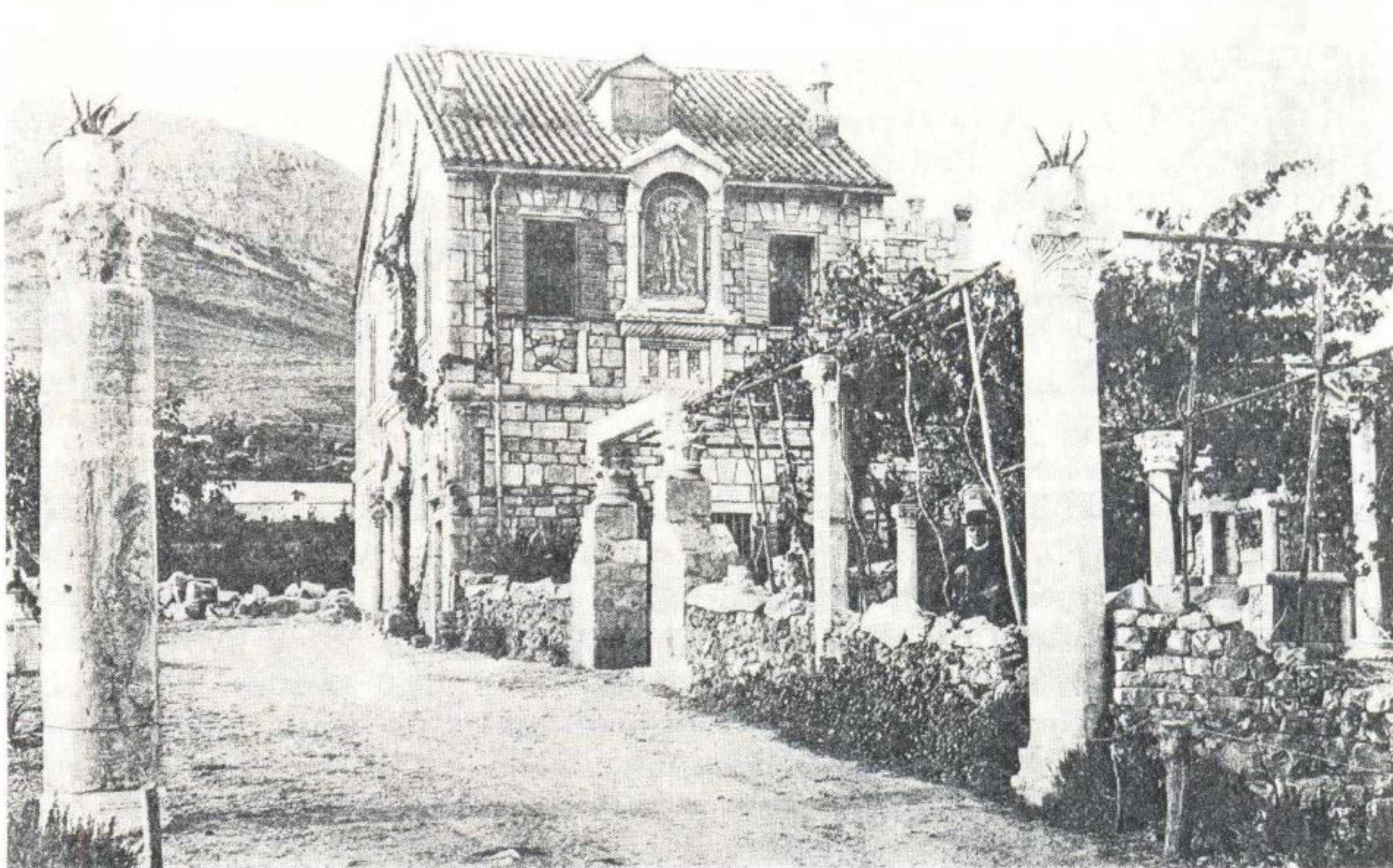
Croatian archaeologist Fr Frane Bulić excavated the early Christian basilica of the martyr Domno at Manastrine (Solin - Split) and decided to open a small museum adjacent to the excavations. The idea of creating this place was born in 1894, when the solemn opening of the First International Congress of Christian Archaeology was celebrated in Manastrine and all the leading European scholars of Christian archaeology arrived at the site. The museum was inaugurated in July 1898. He had a small house used as tool shed restored to create a museum and a visitor centre on the ground floor, a library and other rooms on the first floor.
For the decoration of the exterior façades and the garden, Bulić chose to re-use pieces of sculpture from the excavation and from other medieval structures in the city of Split. The idea was to reuse early Christian objects to recreate a "catacomb" style: on the south wall he placed an aedicule made spolia, with a bas-relief of the Good Shepherd in the centre.
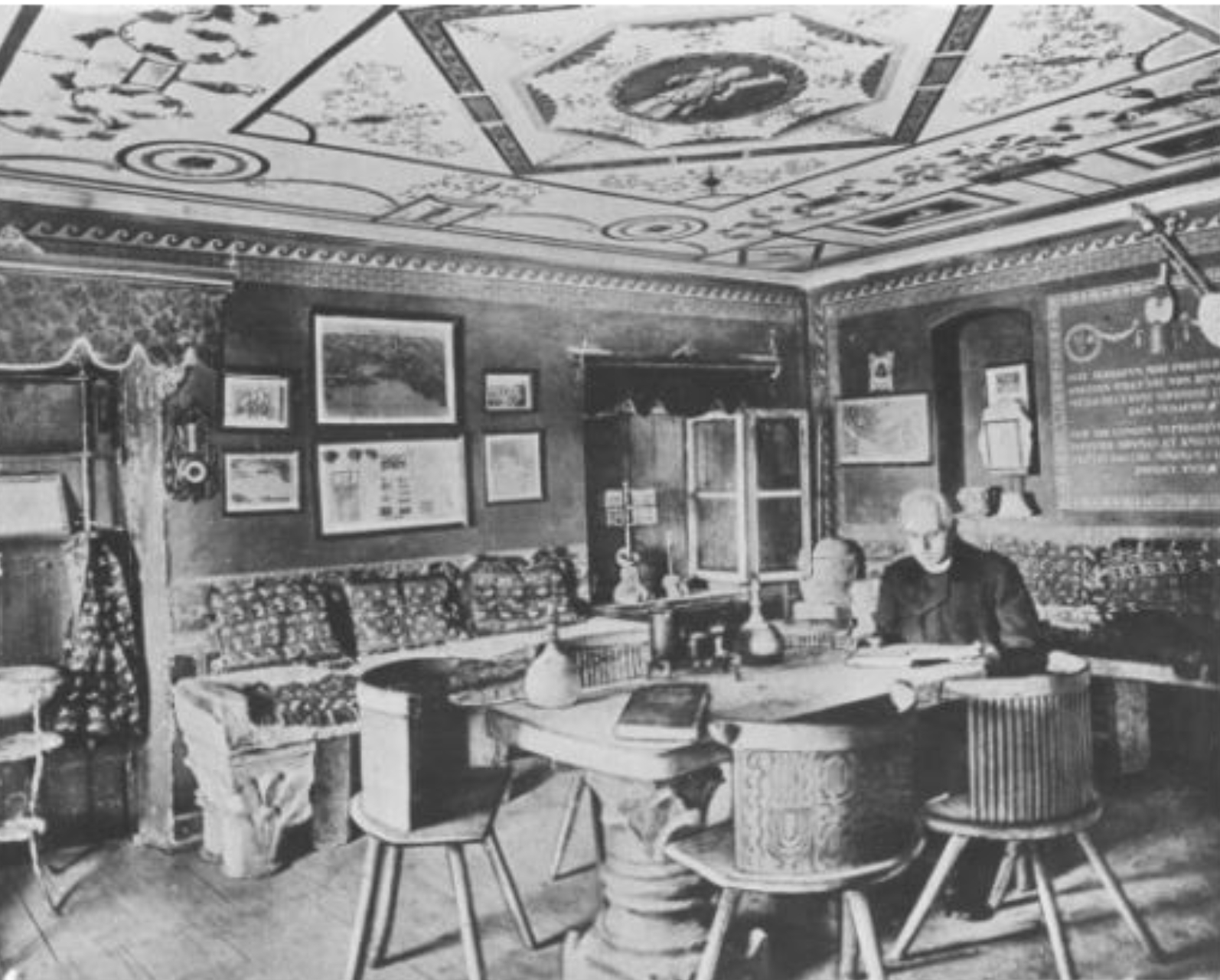
The interior design of Tusculum, which can be deduced from archive sources, was executed by famous artists from Split directed by the Dominican painter and priest Vinko Draganja. These artists decorated the walls and ceiling of the guest room of the ground floor according to Pompeian models and the iconographic style of the catacombs, in an eclectic style desired by Bulić. This room, with walls painted in Pompeian red, had a ceiling decorated like a catacomb: in the centre of a series of red and green lines was the effigy of the Good Shepherd and throughout the room were painted twenty-six other Christian symbols. The room was set up with tables on which small ancient artefacts from the excavations were placed, while a small sarcophagus, two amphorae, eight urns, a column and a piece of mosaic were arranged on the floor.
Also of great interest was the library room on the first floor, about which very little is known. Bulic said in his letters that it was decorated 'as a catacomb'. In the centre of the ceiling was depicted Christ in the guise of Orpheus, and around him were biblical figures such as David and Moses. On the walls, Vinko Draganja had painted the effigies of the Salonitan martyrs Anastasius and Domno, taking their iconographies from the early Christian mosaics of St Venantius in Lateran.
Present State
Sources
Arheološkom Muzeju u Splitu, Arhiv
References
Cecalupo, C. (2022). Catacumbas en museos: archivos documentales y fotográficos para la historia de la museografía’, Anales de Historia del Arte, 32, 235-253, doi: 10.5209/anha.83070 https://revistas.ucm.es/index.php/ANHA/article/view/83070
Višić-Ljubić, E. (2013). Tusculum-nekoć i danas (pp. 131-138). EnZbornik radova 2. kongresahrvatskih muzealaca, Muzeji i arhitektura u Hrvatskoj. Zagreb: Hrvatsko muzejsko društvo.
Vrdoljak, A. (2008).Faksimilna rekonstrukcija zidnih i stropnih oslika u spomen sobi don FraneBulića u zgradi Tusculum u Solinu. Umjetnička Akademija Sveučilišta uSplitu, Split.
Anzulović, N. (1984). Don Frane Bulić i Solinski Tuskulum. In Kulturna baština, 15, 15-30.
Duplančić Arsen (1984) Spomen-soba don Frane Bulića u Tusculumu, in Informatica museologica, Vol. 15 No. 1-3, pp. 33-34.
Arheološki muzej u Splitu, Don Frane Bulić: katalog Izložbe. Split, 1984.