Museo Cristiano Pio Lateranense / Christian Museum Pio Lateranense

Name
Location
Type of location
Cronology
Authors
Description
The museum was created to collect, preserve and exhibit the artefacts found in the great excavations of the catacombs in Rome in the mid nineteenth century. These finds could not be preserved in the catacombs, and needed to be displayed in the museum also to educate visitors about Christian history and the glory of the Church of Rome. Pope Pius IX therefore commissioned the archaeologists Giuseppe Marchi and Giovanni Battista de Rossi to set up a Christian museum and a lapidarium in 1852. The museum opened in 1854 in the Lateran Palace.
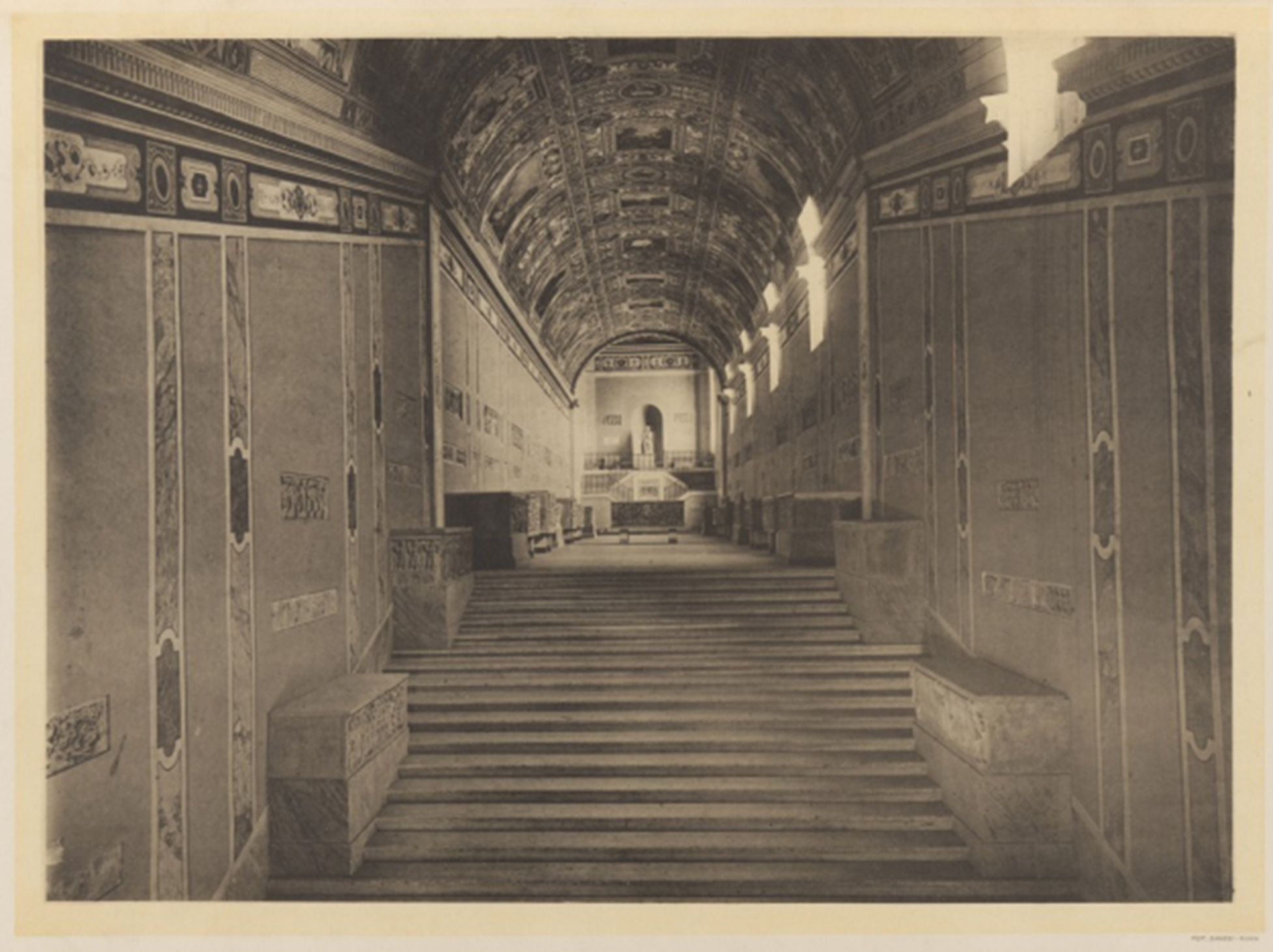
The entrance hall housed a large plan of the suburbs of Rome with identification of the catacombs and two paintings of burial scenes. In the central staircase, original paintings and inscriptions were placed on the walls.
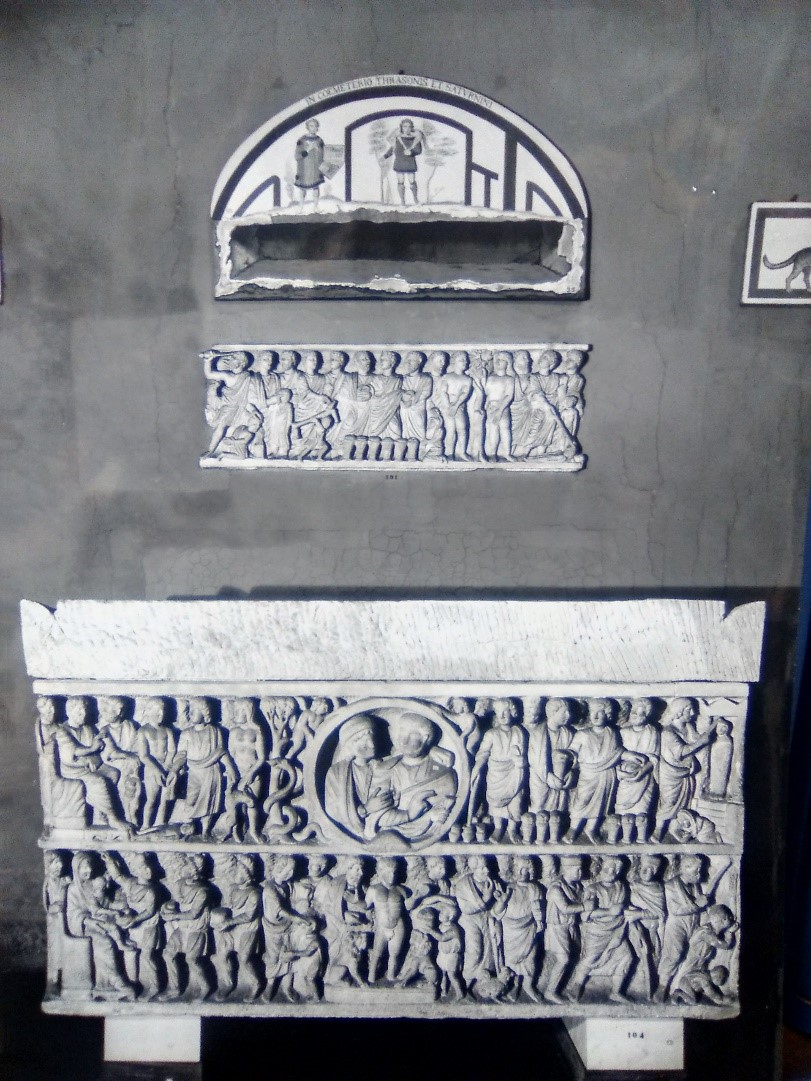
This staircase led to the gallery on the first floor, arranged according to an aesthetic but also didactic principle. Twenty-two intact sarcophagi (eleven on each side) were arranged along the walls and, above them, sarcophagus fronts and inscriptions, or reproductions of the paintings in the arcosoli of the catacombs, were embedded in the walls. The whole set-up was intended to recall the position of the artefacts in a catacomb gallery.
From the staircase at the end of the gallery, there was the access to two rooms in which copies of the main paintings of the catacombs were displayed, together with the original medieval paintings from the church of San Nicola in Carcere and Sant'Agnese fuori le mura.
The paintings to be copied for the Lateran Museum were chosen to represent the history of Christian art and primitive symbolism in the best possible way. The museum had to be a complementary appendix to the visit at the original monuments. In fact, scholars could find useful to see these copies in museum, because it was the only was possible to observe closely and on a life-size scale the reproduction of catacomb paintings considered fundamental to the history of Christian art. The majority of the originals of these paintings, in fact, were hard to reach in the catacombs and therefore very difficult to see.
The original display appears from written and visual sources and is now lost. However, it was all built to recall the catacombs and their architectural style. The large number of copies of the paintings certainly allowed for an immersive experience in Christian art, and the sarcophagi and epigraphs, arranged on the walls, also helped visitors to understand their original position in the catacombs and the original layout of the wall tombs.
Present State
Sources
Archivio Storico Musei Vaticani, b20a, b20c, titoli 112
Cronaca contemporanea. Roma, 25 novembre 1854. La Civiltà Cattolica, 1854, VIII, 5, 567-
576.
Marucchi, O. (1898). Guida del Museo Cristiano Lateranense compilata da Orazio Marucchi. Roma: Tipografia Vaticana.
References
Marucchi, O. (1929). Il museo cristiano lateranense fondato da Pio IX e completato da Pio XI con il Museo Missionario. Angelicum, 6,1/2, 67-76.
Mazzarelli, C. (2013). Copie «autentiche» delle catacombe nel secondo Ottocento: Marchi, Perret, De Rossi e il dibattito intorno alla riproduzione esatta. Ricerche di storia dell’arte, 110/111, 89-102.
Trasferimento delle raccolte Lateranensi al Vaticano. Bollettino Monumenti, Musei e Gallerie Pontificie, I(1), 1959-1974.
Utro, U. (2006). Dalle catacombe al museo: storia e prospettive del Museo Pio Cristiano. Bollettino Monumenti, Musei e Gallerie Pontificie, 25, 397-415.
Utro, U. (2011). Giuseppe Marchi e i “primordi” del Museo Cristiano Lateranense. In S. Piussi (Ed.). Giuseppe Marchi (1795-1860): archeologo pioniere per il riscatto delle catacombe dalla Carnia a Roma (pp. 91-112). Trieste: Editreg.
Cecalupo, C. (2022). Catacumbas en museos: archivos documentales y fotográficos para la historia de la museografía’, Anales de Historia del Arte, 32, 235-253, doi: 10.5209/anha.83070 https://revistas.ucm.es/index.php/ANHA/article/view/83070.