Catacombs of Valkenburg (Museum of Roman Catacombs)

Name
Location
Type of location
Cronology
Authors
Description
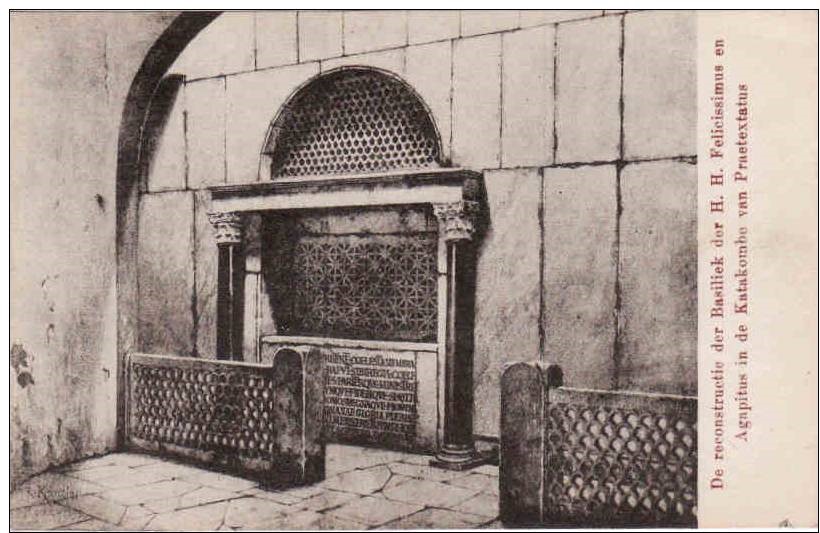
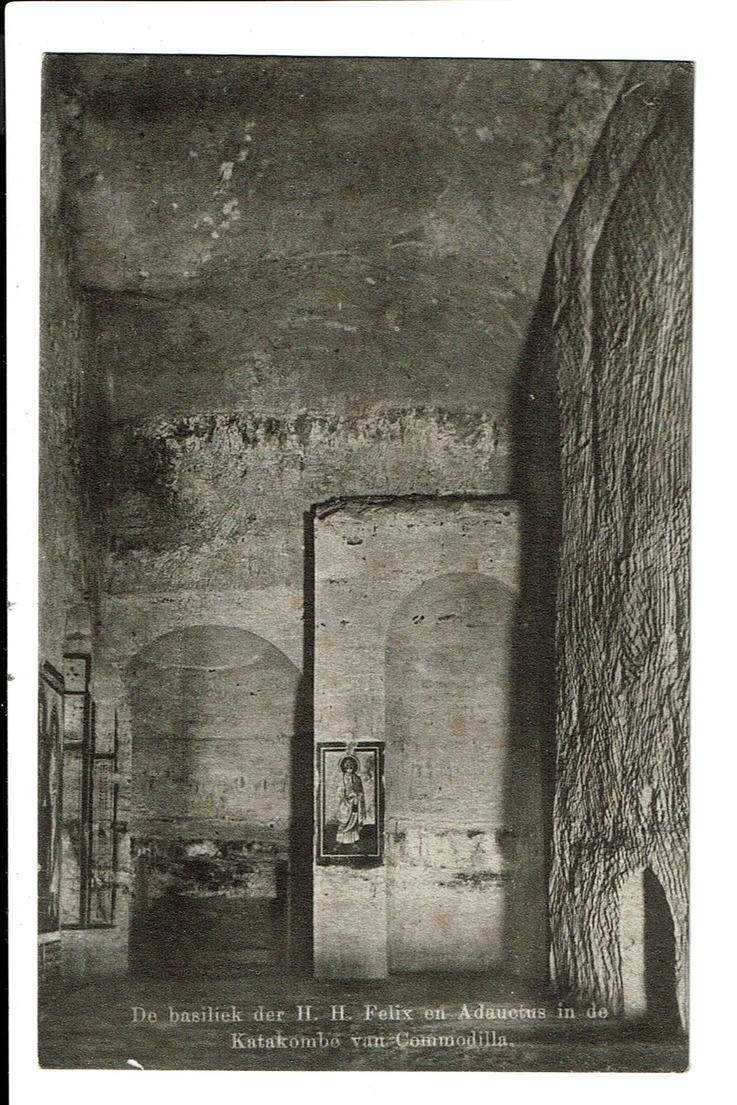
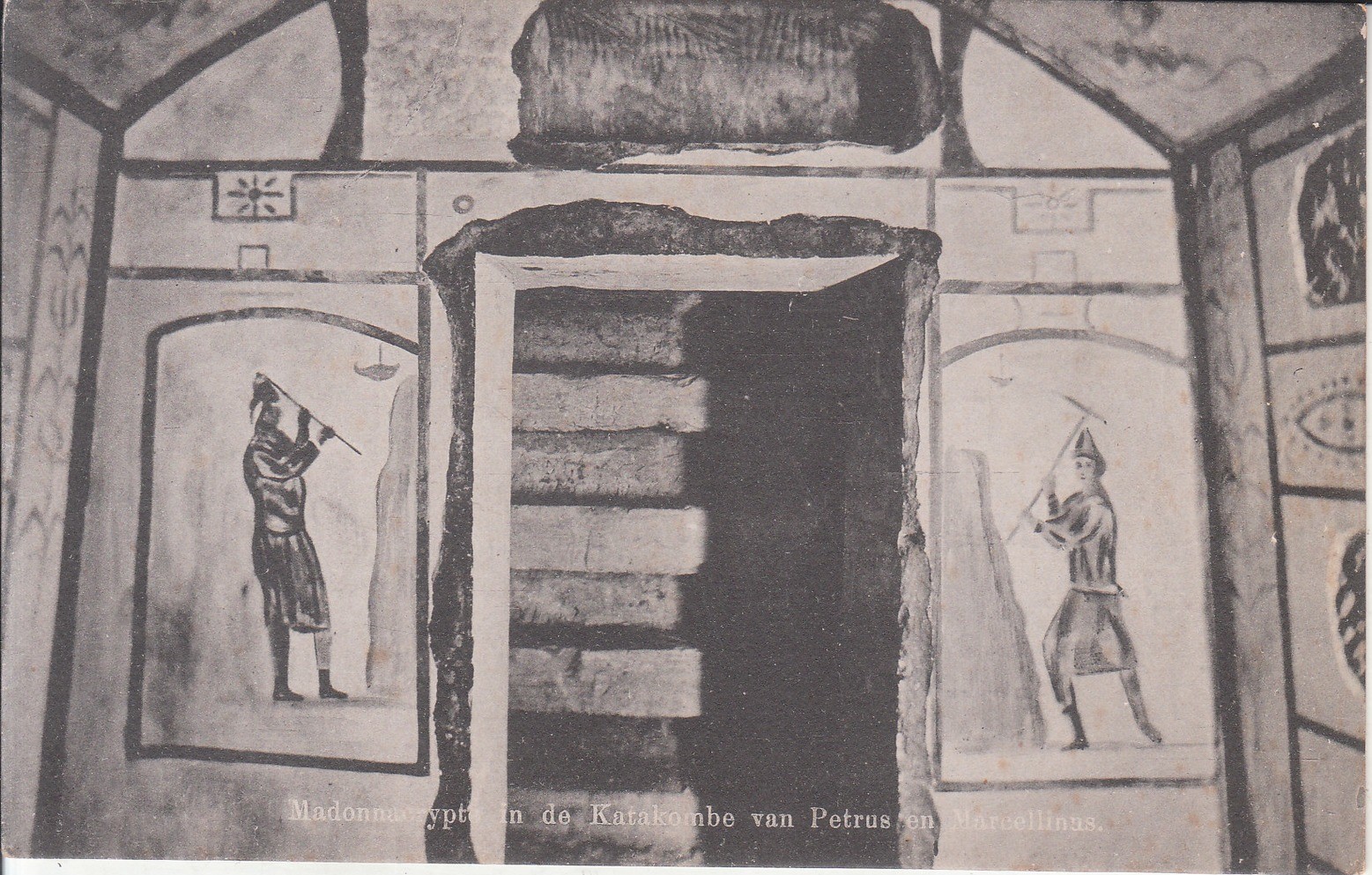
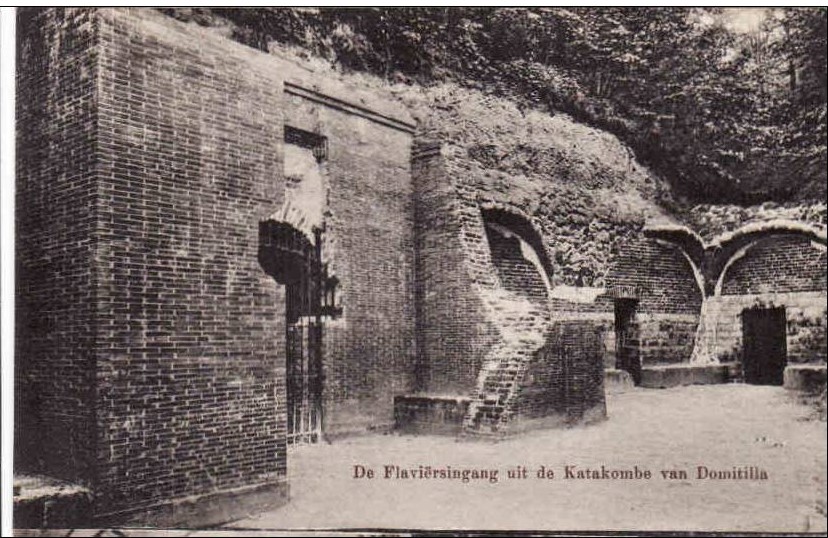
Between 1910 and 1912, a large complex reproducing the catacombs was built in Valkenburg, on the initiative and at the expense of the textile magnate Jan Diepen (1872-1930), in collaboration with the architect Pierre Cuypers. Jan Diepen and Pierre Cuypers went to visit the catacombs of Rome for research and preparation. In Rome they made contact with the Vatican authorities, with the idea of reproducing a catacomb inside a hill on land owned by Diepen. The Commission of Sacred Archeology gave its approval and allowed on-site investigations and measurements. The inspiration for the paintings came from Joseph Wilpert's 'Die Malereien der Katakomben Roms‘.
Cuypers was head of the committee of advisors including archaeologist and Redemptorist Father Leo Hagen. He created underground corridors, rooms, niches and burial chambers in two phases: the so-called Callist group and then the second group, the so-called Domitilla group. In 1910 the Museum of the Roman Catacombs opened to the public.
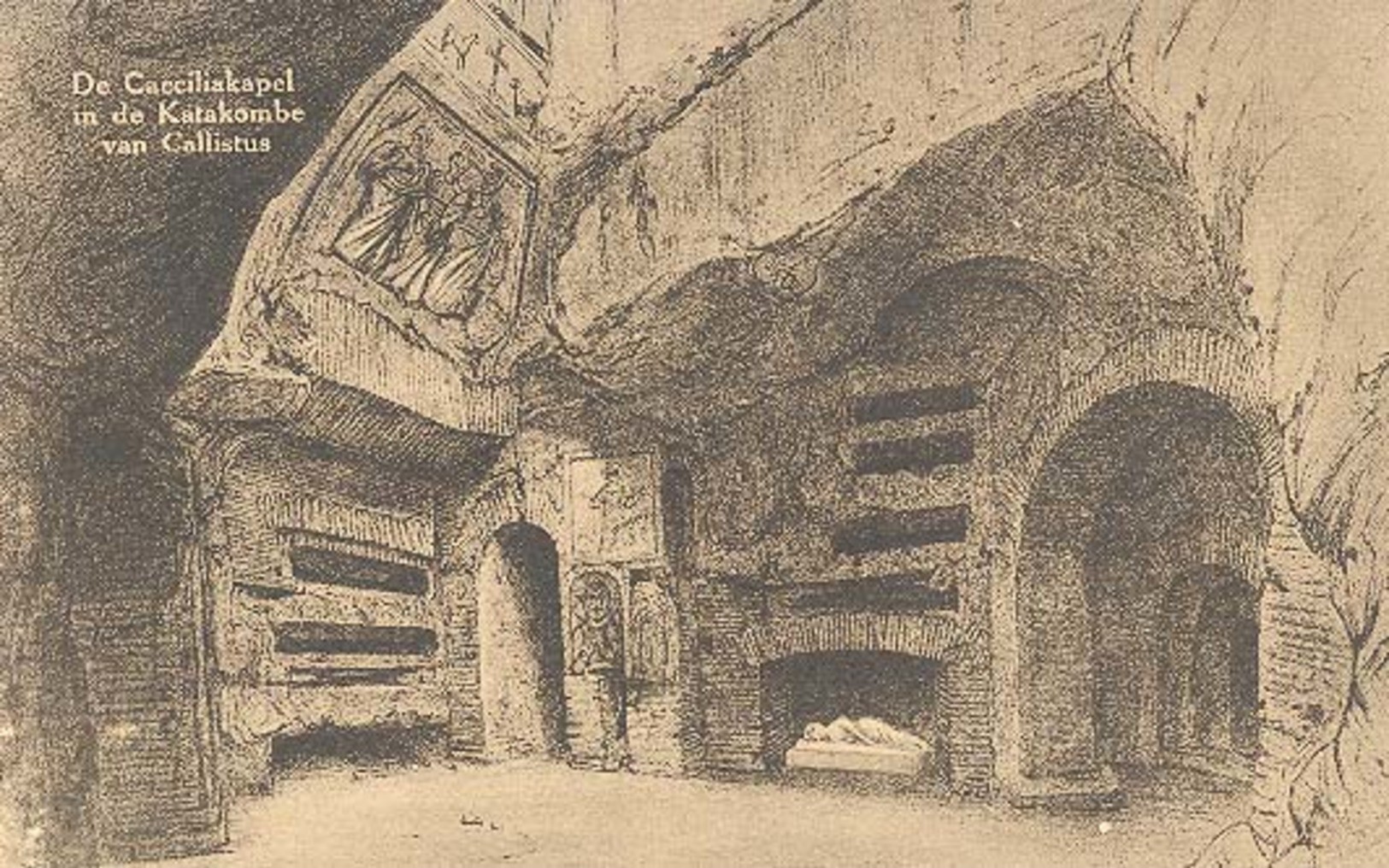
The site consisted of more than sixty copies of areas of the catacombs of Rome in an underground series of galleries. Most of the places reproduced are those of Callistus, Domitilla, Priscilla. Various catacombs were cited and mixed together and were to be perceived as a single place. The crypt of Cecilia was intended to be the spiritual heart of the catacombs. Famous visitors were asked to sign on the walls to reproduce the practice of modern-day visitor signatures typical of Roman catacombs.
Jan Diepen was interested in recreating an experience of mysterious atmosphere, but also had some scientific interests. In 1913, the Catacombs Foundation Valkenburg was founded to promote Christian archaeology as a study centre for research. It also wanted to present the public with evidence of the Christian communities and early-Christian faith. The complex was intended as an 'apologetic book' and a 'spectacle of the faith of the early Christians'.
Present State
Sources
De katakomben Rome Valkenburg: Gedenkschrift (Comitato Archeologico della Fondazione Catacombe)
Archive of the Pontifical Commission of Sacred Archaeology
References
Van Parys, J. (2020). ‘Salvatore Olandese: Pierre Cuypers’ Archeologische Commissie en de kunsttheoretische betekenis van de catacombenkopieën in Valkenburg’, in Bulletin KNOB, 119(2), 36–51. https://doi.org/10.7480/knob.119.2020.2.5008
Rutgers, L. (2009). ‘Die Katakomben von Valkenburg’, in S. Heid (ed.), Giuseppe Wilpert, Archeologo cristiano, Vatican City: Pontificio Istituto di Archeologia Cristiana, pp. 467-483.
Reiß, A. (2008). Rezeption frühchristlicher Kunst im 19. und frühen 20. Jahrhundert. Ein Beitrag zur Geschichte der Christlichen Archäologie und zum Historismus, Dettelbach 2008.
Lange, U. and Sörries, R. (1993). ‘Josef Wilpert und die Katakomben von Valkenburg’, in Antike Welt, 24/3, pp. 235-43.